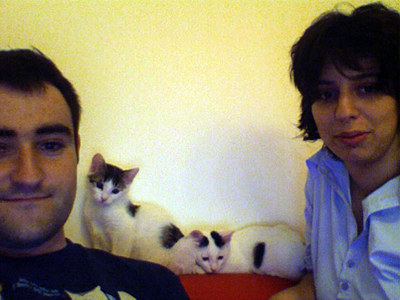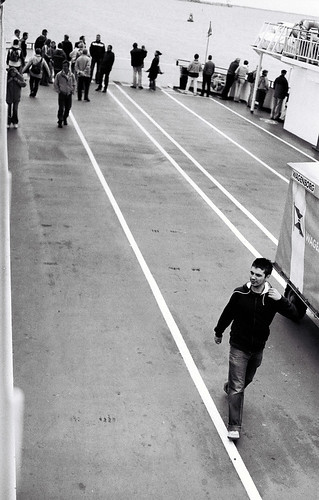
(this is the big post about china that was missing here, for a bit of context on our daily life.)
on 66 qing dao lu’s blog, JNA (another portuguese living in shanghai) posted a crop of a magazine article, stating the 5 stages of the adaptation to china. a very well written piece by someone who has been in the middle kingdom for the last 3 years. here’s how it goes (some parenthesis are mine):
* Stage One: The Honeymoon Stage – Everything is just plain weird and wonderful. Taxis come in various colours: some have three wheels (though not in Shanghai). Men in beige suits are carrying purses and have extremely long fingernails and some girls are holding hands. Everything is covered in neon. People stare (a lot). Women have umbrellas in the sun. Cheese is a luxury product.
(I would add: people walk around in their pajamas, there are policeman with whistles in every crossroad, the skyline is beautiful, taxis/buses/subway have tv screens, everybody carries green tea in a bottle, people carry the most unusual things in their bikes.)
* Stage Two: The Irritation Stage – Taxi drivers always choose the longest queue at traffic lights. A simple banking operation takes half a day. It’s impossible to buy a return train ticket. It feels like everybody is trying to cheat you. The so-called Caesar salad you ordered is made with spam. Nobody holds the elevator door open. Everyone smokes, even in the hospital.
(I would add: car drivers never give way for ambulances, car drivers don’t care for pedestrians, you are required to register at the police. )
* Stage Three: The Rejection Stage – Give up trying to communicate with Chinese people who don’t speak English (except your taxi driver). Give up learning Chinese. Only shop in Carrefour. Live in a suburban compound. Complain non-stop about the traffic, pollution, bad manners, noisy neighbours, Chinese TV and poor quality products. Get BBC, CNN and a couple of humidifiers.
* Stage Four: The Integration Stage – Buy a bicycle. Start to learn Chinese and practice with the taxi driver. Say hello to Chinese people who say hello to you, even when you have a hangover. Develop a level of patience that Mother Theresa would be proud of. Start shopping in the local fruit market and cooking Chinese food.
(I would add: start to order the hot dishes in the chinese/thai restaurants, get addicted to hot pot, buy fake dvds from the best stalls)
* Stage Five: The Re-Entry Stage – Go back home and realize how tedious “developed” life can be. Become homesick for China and make plans to return.
from here.
we’re in between a few of these stages, perhaps mid-irritated, mid-integrated.
we don’t have satellite tv, and we are happily brainwashed by cctv 9 (china’s only english channel) every morning, and occasionally, the weekend shanghai daily – we take it a grain of salt, things are never what they seem. we found our way around the firewall thing. we bought a bike and we are learning chinese (last week i wrote my first 3-line composition. yay!).
it still feels like everybody is trying to cheat us, but now that we’ve learned how to say “too expensive!” (tai gui le!), our life has entered a whole new level of bargaining. i hate discussions (bargaining included), but maybe this turns out to be the therapy i needed to get over that little phobia.
we still buy at carrefour and other big shops 90% of the time, simply because it involves no bargaining in tricky places in chinese and recognizing the brands makes shopping a lot easier. despite those arguments, we might definitely turn to smaller supermarkets soon, because we’re getting tired of the big ones. the thing is, big supermarkets come with lots of chinese people. and i mean lots, too many! they’re loud, noisy and unfamiliar with the “queue” concept. the whole experience wears us out and by the time we arrive home we’re cursing and exhausted, whether it’s ikea, carrefour or hymall… it’s really difficult to explain, believe me.
i wish we could hop on a plane now and then for a nice saturday morning shopping in the groningen’s market…
and the most noticeable change in 3 and a half months, we’re almost as patient as mother theresa, or buddha himself. the tolerance you build here is amazing. i mean, what other sane options do you have to deal with all the things that go against your normal approach, but to be insanely patient and work your way around it?
i’ve cried in a number of places here, from sheer frustration – some days everything goes wrong. but hey! good things come to those who wait and silly moments make great memories. i’d say that all in all, we’re having a good time. :)
“A verdade é que a China cansa. Os chineses são diferentes. Aquilo que ao início é pitoresco e novidade torna-se exasperante, com o passar do tempo e a repetição das situações.”
em português, outra visão, ligeiramente mais pessimista, que vale a pena ler na íntegra aqui.