Categories
algarving in portugal

the fruit tree collection

so tavira has an “experimental agrarian center” (CEAT), which is a very low-key place with an important mission: it helps local farmers get started and learn more about all kinds of things related with agriculture. like many places in algarve, tavira is a town that lives mostly off tourism, but the more you move away from the coast and into hills, the more you see a kind of dryland subsistence farming that is hard but so important to people’s lives in these villages.
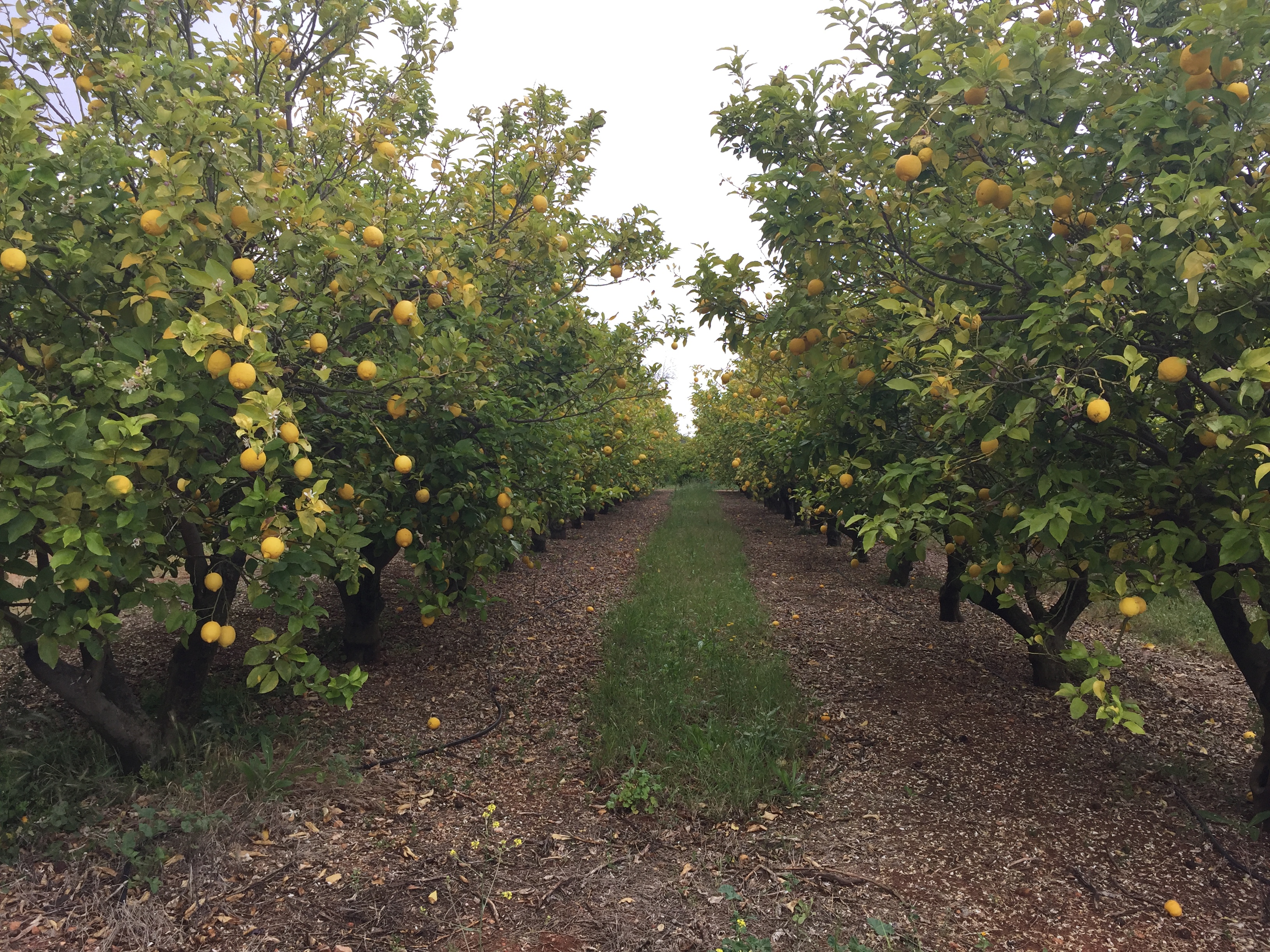
so as part of its mission, the center started a gigantic project to research and collect specimens from the local varieties of fruit trees, which they maintain in a specific area — a seed bank of sorts, but with actual living trees. in the last decade, they have collected hundreds of cultivars of citrus trees (the main crop around here), as well as carob, almond or figs, but also things that you might not expect like specific southern portuguese grapevines, loquats, pomegranate or “pêro de monchique”. researching these species in the region involved talking to a lot of farmers and then doing genetic analysis to identify the differences between certain plants, to make sure they are actually unique cultivars (and not just the same tree with a different name).
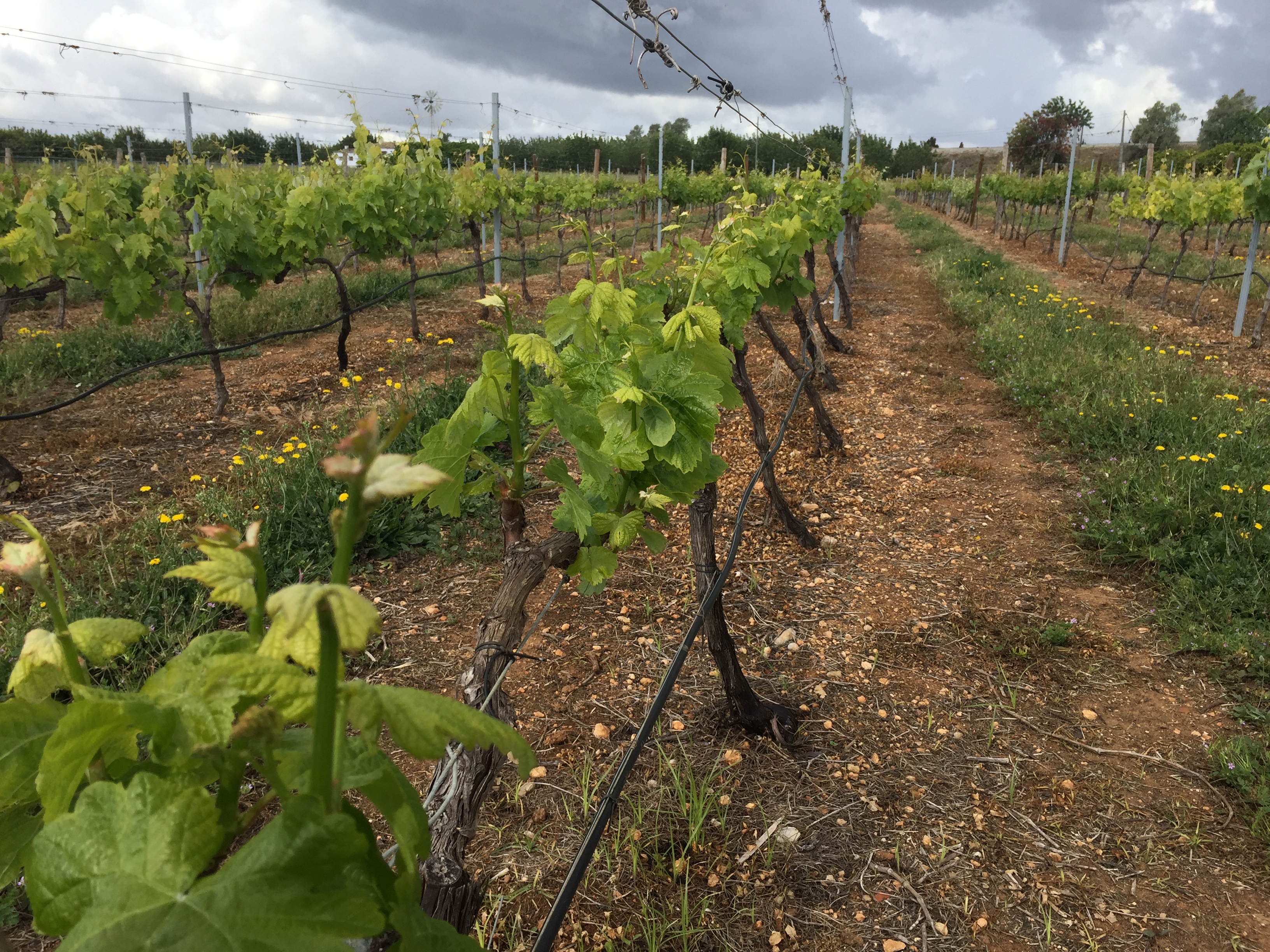
so after specimens are collected, they’re brought to tavira where they are further studied and serve as a reference for the future, in case something happens or someone is interested in the local species of these trees. want to know which plants are best for your land, or how much production you can expect from a certain cultivar? they can tell you! want to produce a special wine that is labeled as being from algarve’s region? you’ll need to make sure you’re using the right grapes… guess who you can ask about that?

walking the grounds and looking at all these trees in their neat rows, you get the sense that this is not only an invaluable genetic repository for the future, but also a huge work of love, spread out over many square meters. unlike a static museum collection, this one is alive and needs constant care and attention if it is to fulfill its purpose, and i’m really glad for the humans doing this work.
Categories
algarving

running the eurovelo

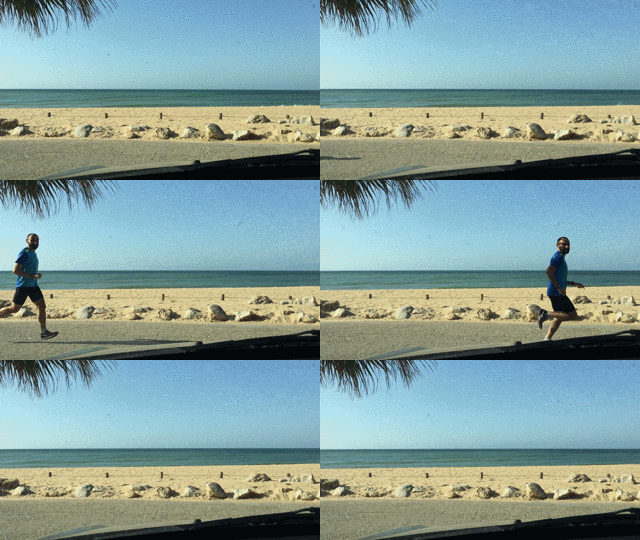
i mentioned on the last couple of monthly videos that the boy has been running the whole algarve coast on the weekends — an epic adventure split into 10 half-marathons. today was the last one, so he finally ran the whole region: from the margins of the guadiana river in vila real de santo antónio all the way to the lighthouse in sagres! hurray!

the eurovelo 1 (aka the atlantic coast route) is the bike path that he used to map his races since it stretches the whole algarve, but this turned out to be a poorly marked and maintained route, with many stretches coinciding with the N125 which is one of the most dangerous roads in the country. most of the time, the boy was looking at his watch and hoping that he was still on the right track. i wonder how the tourists (likely more used to the well-paved, well-marked paths of northern europe) fare on these southern paths.

despite that, it was a such a treat — what a way to get to know the region! my participation in this whole endeavor was limited to driving around and supplying water at regular intervals, but even so, it was great to have an excuse to go and see all these places we hadn’t yet visited. i’ve bookmarked many beautiful stretches in my head, and noticed that we definitely love the corners of the country the most: both our own east side with the lagoon sceneries, as well as the soft rolling hills of the west, cut short by their massive cliffs. we shall return soon, to properly explore them.

more than the running itself though, this was a feat of the boy’s tenacity. he never does a 101 list — he just sets up one big goal at a time and works consistently on it, preparing and getting it done without even bragging about it on social media. i can’t wait to see what the next adventure will bring! :)

Categories
algarving

a sound postcard from portugal

a couple of weeks ago, a postcrosser sent bbc radio4 a really nice sound piece about her favorite sound, which was the sound of postcards being dropped through her mail slot. in the conversation we had with her afterwards, i discovered marg had been collecting sounds for quite some time, all around the world. including this one, made not even 20kms from here:

every one of these sounds is part of living here. the birds and the songs, the waves and the planes — they’re all algarve. i find this so magical, that it makes me wish i had the forethought of recording much longer pieces from the places we’ve lived in, instead of just seconds.

marg has lots of field recordings like this from her trips to tokyo, santorini or the black forest. i am enthralled, listening to all these little bits of saudade.

Categories
algarving foooood

bolinhas do carlos

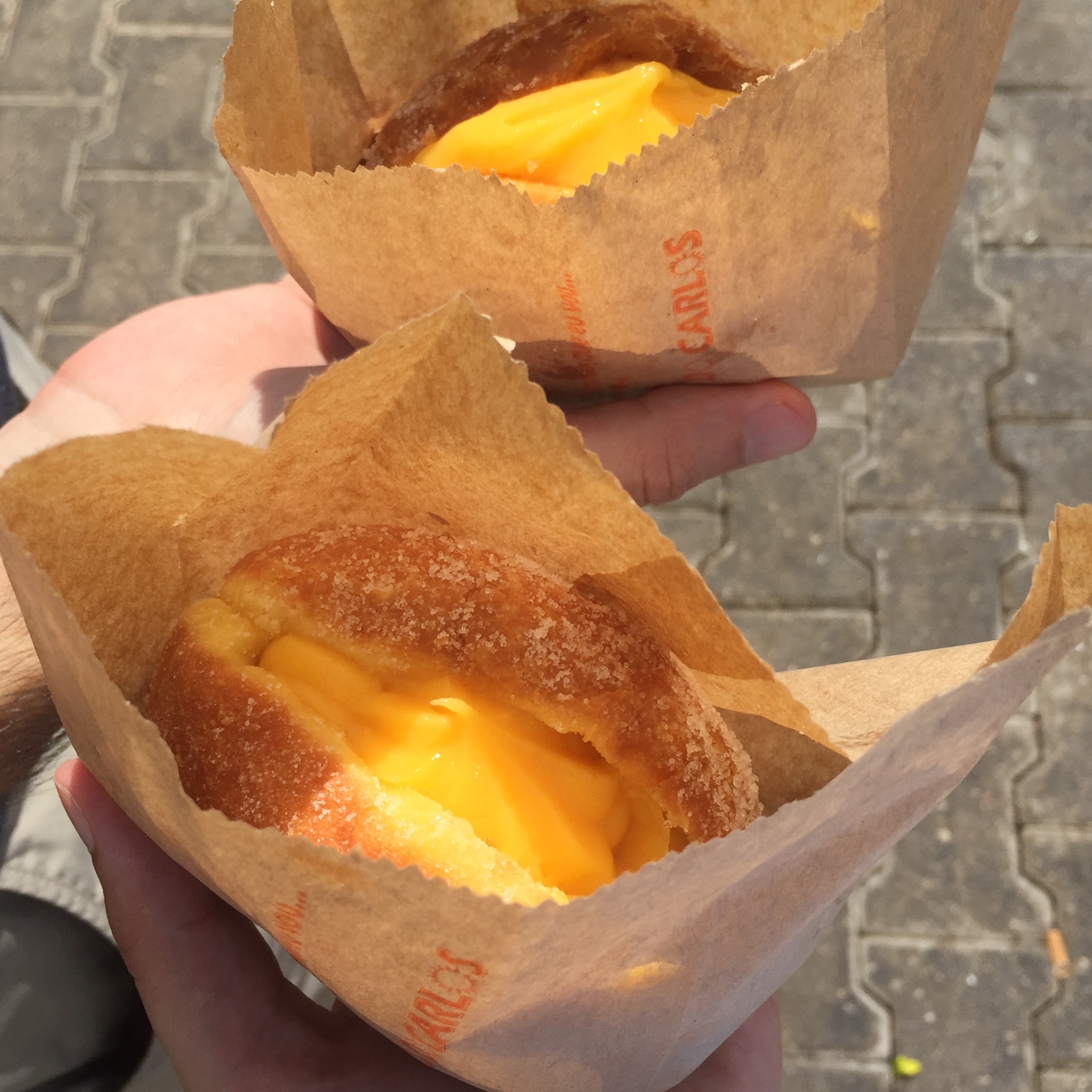
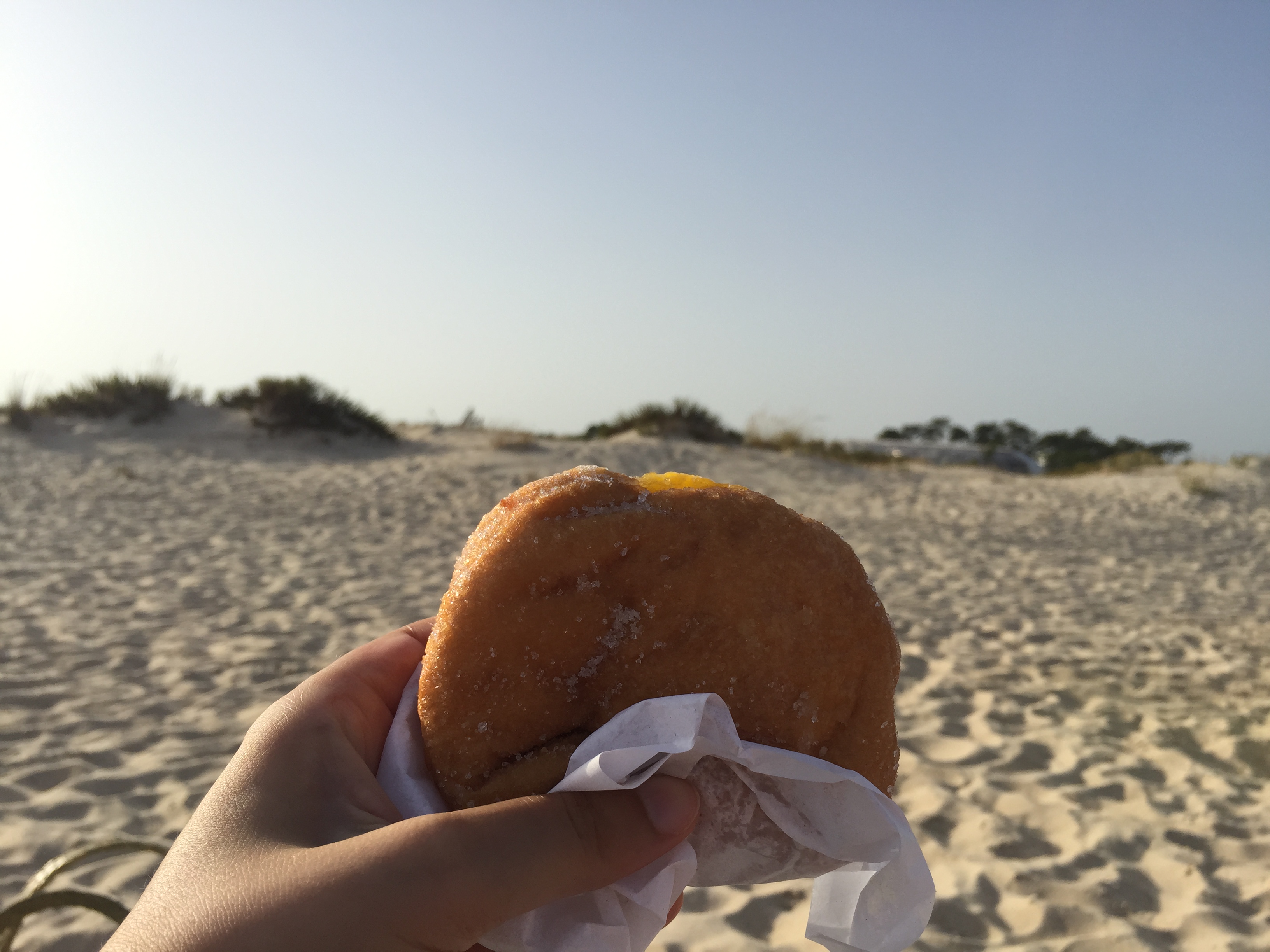
and since the theme of the moment seems to be sweet stuff, i’m going to mention the typical beach snack in portugal too: bolas de berlim! they’re a different species from their german or slovenian counterparts, in that they’re not filled with jam or covered with a thin layer of chocolate. these balls are serious business, cut in half and properly filled with “creme pasteleiro”, a kind of thick egg cream.

as a rule, they’re outstanding everywhere in portugal, but somehow they seem to taste better at the beach… maybe something about all that sea breeze opening one’s appetite? :D men carry them around the beach in styrofoam boxes, shouting out loud “booooooliiiinha!” so that everyone can hear and come to them for their sweet craving.

we like them a lot but truth be told, we don’t go to the beach all that often… so when a friend told us they could be purchased straight from the source, we drove to the factory in olhão and got some!

i have to say, i was a bit skeptical but they were a-ma-zing! still warm from the frying and filled with the freshest egg cream, not too lemony or otherwise weird — just as i like them. what a treat!

sadly, the factory closes over winter, and we’re already counting the days until they’re back in business. see you soon, dear bolinhas!

Categories
algarving foooood

xarém

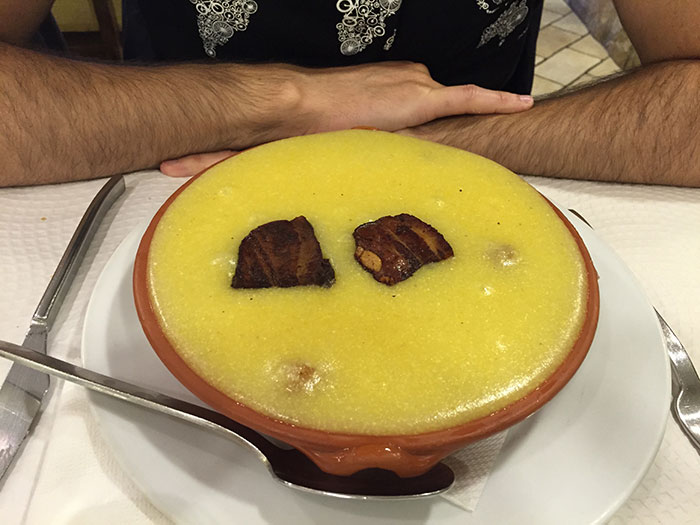
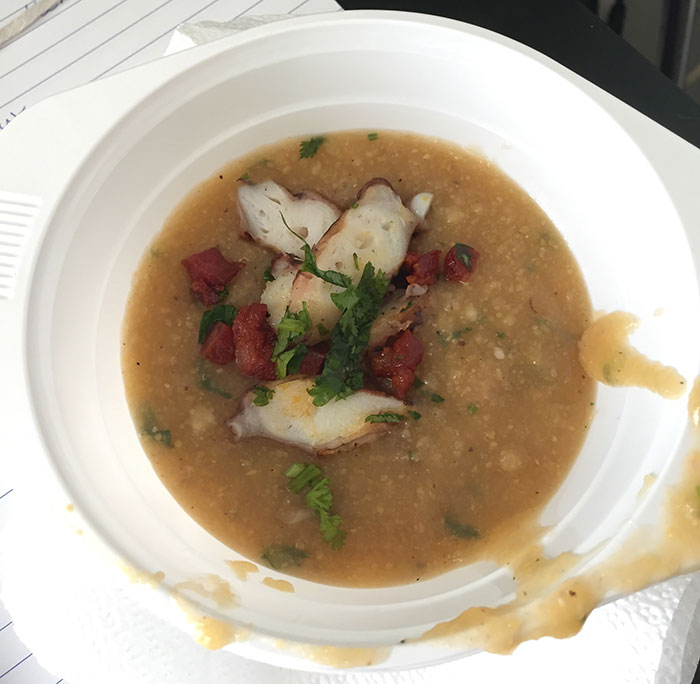
corn flour is used in the north of portugal to make “broa”, a heavy kind of bread that often accompanies countryside meals… but in the south, this bread is nowhere to be found. instead, they grind the corn coarsely to make xarém, a sort of soupy concoction resembling very watery polenta. corn being corn, it tastes mostly to the flavorings one adds to it, and so it’s incredibly versatile.

you can eat it with mussels and bacon, as is traditional in olhão:

or with octopus, as in this cooking demonstration in tavira:

the corn meal was cooked in the octopus’ cooking water, and turned an unappealing brown, but was actually way tastier than its yellow alternative. either way, it is super heavy as a meal, and best enjoyed in winter. i approve!