
like my grand grandpa used to say, “sweet things never made me bitter!” :D
(from our xmas party, 2 years ago in groningen. more sweetness and nostalgie, on flickr).

like my grand grandpa used to say, “sweet things never made me bitter!” :D
(from our xmas party, 2 years ago in groningen. more sweetness and nostalgie, on flickr).
i was browsing the search queries that arrive at meiadeleite.com (always entertaining) and stumbling upon the strangest phrases:
* desenho tenda de indios
* how to make leite creme
* porque as mulheres tem vontade de ser mae (…)
* o que significa i need a hug? (oh dear…)
* dor no ombro
* dimicina pills
* so so in portuguese (lol)
* mulheres podem dar leite sem estar gravida (and a lot of variations of that! :S)
…and then comes p.: “where are you checking that?”.
“awstats”, i said. off he goes to check his own stats. i was guessing “postcrossing guy” or something like that would come up first. nops. instead, “nude pumpkin race” does, way ahead any other queries.
and check this out, for that query, his site comes even before nakedpumpkinrun.org on google! now that’s classy! :D
não sei o que é mais triste. se a precariedade de um país a recibos verdes, se o deixar-andar de quem está nessa situação e não tem coragem de lá sair.
olhem para nós. estamos aqui há 7 meses. com contractos de trabalho. com impostos pagos. com o almoço pago. com seguro de saúde. com férias, bónus e regalias. onde somos apreciados pelo trabalho que fazemos. a ganhar suficientemente bem para pensarmos em investir noutras coisas, em viajar, em virar freelancers. (o mindthisgap tem mais exemplos como o nosso).
não, nada disto foi sorte. foram escolhas construídas.
eu percebo que nalguns casos estes cenários não são possíveis. há família, há a idade, há profissões difíceis de encaixar noutros contextos.
mas e nos outros casos, como os das pessoas da minha idade, recém-licenciadas, que se sujeitam assim, durante anos? porque é que não saem daí?
expliquem-me lá esse amor à pátria que vos atraiçoa, que eu sinceramente, já não percebo.
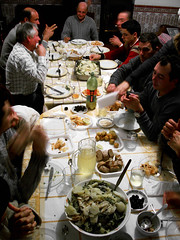
it’s the pre-xmas season again. we can’t really feel it here, because the chinese are not very keen on that holiday. no xmas lights on trees (well, not more than usually anyway), no window shops decorated with red and green.and yet, we have our own subtle reminder: moms.
“so what do you want me to cook for you when you come?” is the question following “how are you?” nowadays. to which we happily answer with the roll of our favourite dishes and as many xmas desserts as we can remember.
it’s not like we’re starving here, but you know, mom’s food will always be the best – and i can guarantee that it tastes especially delicious after a few months abroad.
we should start dieting now, to make up for all the extra kilos we’re going to put on those 2 weeks.
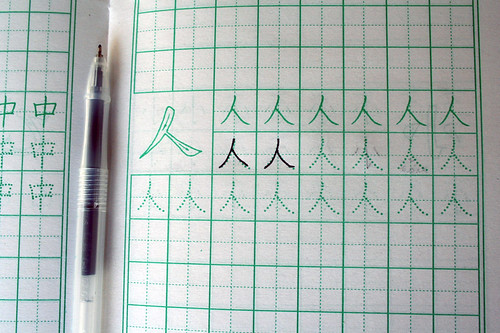
you know tones, right? the way we rise our voice in the end of a question, for instance? that’s a rising tone. mandarin has tones too, 4 of them plus a neutral one. and they use them in every single syllable!
it might be hard to understand what i mean. so here’s an example:
* bīng (spoken with a flat and slightly long ‘i’) means frozen
* bǐng (where your voice ‘i’ starts in the middle of the tone, takes a dive and then rises) means cake.
* bìng (spoken with a sharp falling ‘i’) means sick.
the consequences? a foolproof recipe to (a funny kind of) frustration. you want to say chicken and you say “how many” (jī and jǐ). you want to say country and you say fruit (guó and guǒ). you want to say fish and you say rain (yú and yǔ). *sigh*
speaking chinese is like playing a memory game. is this the word i want? did i remember the right tone? naturally, they don’t understand you if you don’t pronounce words correctly (except in specific contexts). i mean, why should they – to them it’s a different word!
we have a little game going on: saying our street name so perfectly that the taxi driver understands without us having to repeat it. which is a hard task, even after hundreds of taxi rides. this is the tipical scenario when we enter a taxi (dialogue without tones, too much work!):
us: nihao! (hi!)
taxi driver says: nihao! qu nali? (hi! where to?)
us: dong xin lu, wu ning lu. (dongxin road, wuning road)
taxi driver confused: wuning lu… shema lu?* (wuning road… what road?)
us: dong xin lu. dong xin lu. dong xin lu. dong xin lu. dong xin lu. dong xin lu… (dongxin road! dongxin road, dongxin road… – all spoken with minimal tone variations, each time slowlier…)
taxi driver: ah! dongxin lu!
us: dui! (yes! with a very happy face)
and off we go, feeling more or less proud according to the number of times we had to repeat it. one day we’ll be as good as dashan, just wait and see!
* wuning road is very big and easily recognizable. dongxin road is not.